Temple Hair Transplant
Temple Hair Transplant treats receding hairlines and temple recession – the most common first sign of hair loss in men. Our specialists create natural temple areas that frame your face with a youthful appearance.
Temple Hair Transplant – Naturally Correct Receding Temples
A Temple Hair Transplant is one of the most common treatments we perform. Receding temples – the recession of the hairline at the sides of the forehead – are often the first visible sign of androgenetic hair loss in men. They can begin as early as the twenties and make the face appear older.
Our Temple Hair Transplant specialists understand the special significance of this zone. The temples frame the face and are visible in every conversation. A natural-looking restoration requires precise technique and artistic skill – both of which we bring with over 25,000 successful treatments.
Why Temples With Us: Specialized temple recession experts, DHI technique for precise growth direction, natural transition to the hairline, individual design, English-speaking care team.
Why Are the Temples Particularly Important?
The temples are of particular importance in a Temple Hair Transplant for several reasons. First, they are immediately visible with every eye contact. Deep receding temples can make the face look disproportionate and signal age.
Second, the temples define the transition between the face and the head. A natural temple line has a gentle curve that harmoniously connects with the front hairline and the side areas. In a Temple Hair Transplant, we pay special attention to this harmonious transition.
Third, the growth direction at the temples is complex. The hairs grow at a flat angle pointing backward and slightly downward. Only with precise technique can this natural pattern be replicated.
Stages of Temple Recession
- Stage 1-2: Mild temple recession, 400-600 grafts per side
- Stage 3: Moderate temple recession, 600-900 grafts per side
- Stage 4: Deep temple recession, 900-1,200 grafts per side
- Stage 5+: Very deep temple recession, often connected with hairline
- Women: Temporal thinning, often more diffuse than in men
- Traction alopecia: Hair loss at temples caused by tight hairstyles
The Technique Behind Temple Hair Transplant
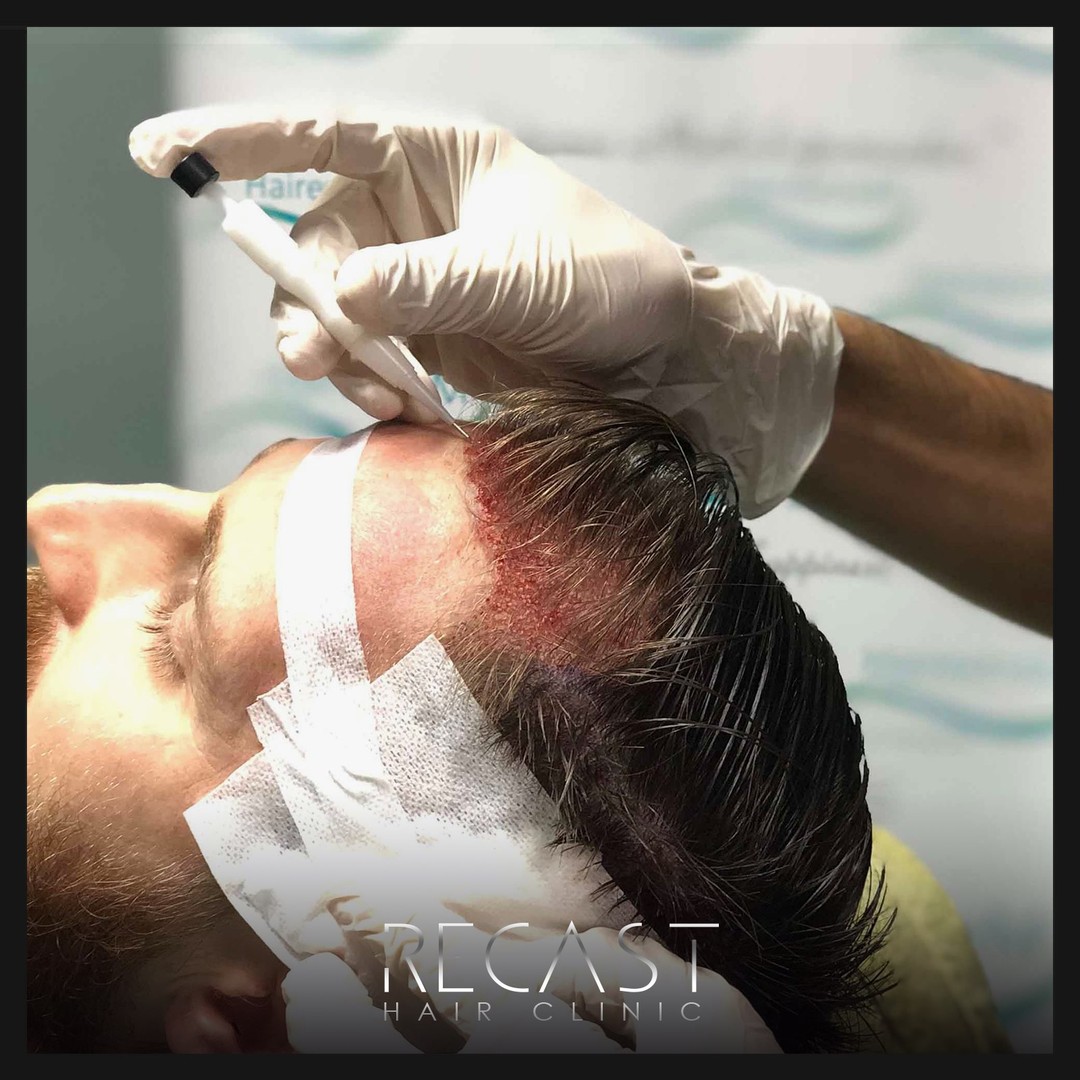
For Temple Hair Transplant, we preferably use the DHI technique. The hairs at the temples have a very specific growth direction: they grow at an extremely flat angle (10-20 degrees) pointing backward and slightly downward. Only with the Choi Implanter pen can we precisely control this angle.
At the front edge of the temples, we exclusively use single-hair grafts. These create the natural, soft transition to the hairless skin. Behind them, we use grafts with 2-3 hairs for more density.
The shape of the temples is individually designed. We consider your face shape, your age, and your natural hairline (if still present or visible in photos). The goal of the Temple Hair Transplant is a harmonious integration with the rest of your hair.
- 1 Analysis of existing temple shape and facial proportions
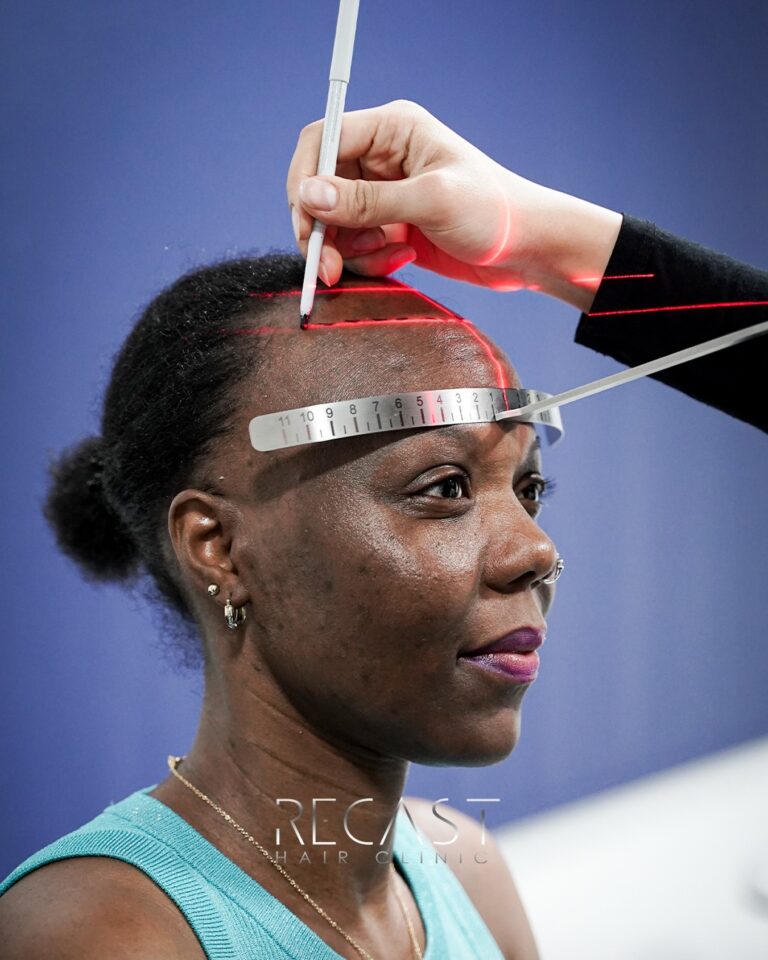
- 2 Design of a natural temple line with gentle curve
- 3 DHI technique for precise angle control (10-20 degrees)
- 4 Single-hair grafts at the edge for soft transition
- 5 Multi-hair grafts behind for density
Temple Hair Transplant: The Natural Growth Direction
The key to a natural result in Temple Hair Transplant is the correct growth direction. At the temples, hairs do not grow like on the top of the head – they point backward toward the ears and slightly downward.
If the hairs are implanted in the wrong direction, they stand up or do not lie properly. The result looks unnatural and cannot be corrected through styling. Our surgeons have years of experience with Temple Hair Transplant and master the correct placement perfectly.
Expert Tip: In Temple Hair Transplant, it is important not to overdo it. The temples should look natural and age-appropriate. A temple line that is too deep or too straight can look unnatural.
Temples Only or Complete Hairline?
Many patients ask whether they should only have a Temple Hair Transplant or whether the entire hairline needs treatment. The answer: both are possible, and the right choice depends on your individual situation.
If your front hairline is stable and only the temples have receded, an isolated temple treatment is ideal. This is more affordable and requires fewer grafts. However, if the front hairline is also affected, we recommend a combined treatment for a harmonious overall result.
In the free consultation, we analyze your situation and recommend the optimal approach. Often, a Temple Hair Transplant alone is sufficient to look dramatically younger and fuller.
- → Temples only: When the front hairline is stable, 800-2,400 grafts
- → Temples + hairline: For complete restoration, 2,000-4,000 grafts
- → Temples + mid-scalp: For advanced hair loss, 3,000-5,000 grafts
Recovery and Results of Temple Hair Transplant
Recovery after a Temple Hair Transplant takes about 7-10 days for the crusts. Since the temples are very visible, many patients wear a hat or cap during the first week. Slight redness may persist for 2-3 weeks.
The transplanted hairs fall out after 2-4 weeks (Shock Loss) – this is normal. After 3-4 months, the new hairs begin to grow. The complete result of your Temple Hair Transplant is reached after 12-14 months: full, natural temples that frame your face with a youthful appearance.
- → Week 1: Crusts form, hat recommended
- → Week 2: Crusts fall off, redness fades
- → Week 2-4: Shock Loss, transplanted hairs fall out
- → Month 3-4: First new hairs begin to grow
- → Month 6-8: Noticeable growth, temples become more defined
- → Month 12-14: Final result with full density
"My receding temples always made me self-conscious – I hid them with my hairstyle, but it was uncomfortable. After the Temple Hair Transplant, I can finally wear my hair however I want. The difference is incredible, and nobody notices I had anything done."
– Marcus L., Engineer, 38
Cost of Temple Hair Transplant
A Temple Hair Transplant is one of the most affordable treatment options, as it often requires fewer grafts than a full hairline restoration. At our clinic, it costs between €1,800 and €3,500 all-inclusive, depending on the extent of temple recession.
Compared to the UK or USA, where you would pay €6,000 to €12,000 for a high-quality temple treatment, this represents excellent value.
- Detailed consultation and temple design
- Temple Hair Transplant with DHI precision technique
- 3-4 nights in a 4-5 star hotel
- All airport transfers with VIP vehicles
- Complete aftercare kit with medications
- First hair wash at the clinic
- 12 months aftercare with English-speaking coordinator
- Lifetime guarantee on transplanted hair
Preventing Further Hair Loss at the Temples
After a Temple Hair Transplant, we often recommend accompanying medication therapy to prevent further hair loss. The transplanted hairs are permanent, but the natural hairs around them may continue to fall out.
Finasteride and Minoxidil can stop or slow the hair loss. This protects your investment and maintains the natural appearance. We advise you individually on which therapy is right for you.
Quality Promise: Temple Hair Transplant is one of our most common and successful treatments. We guarantee natural-looking results that harmoniously frame your face.
Your Next Step Toward Temple Hair Transplant
The first step toward your Temple Hair Transplant is a free consultation. Send us photos of your receding temples, and our specialists will analyze how many grafts are needed and what result is realistic.
The consultation is non-binding and free of charge. You will receive a detailed plan with a cost estimate. Trust our experience – we have helped thousands of patients eliminate their receding temples!
Get your free consultation now: Fill out the contact form or message us on WhatsApp. Our English-speaking team will respond within 24 hours with a personal assessment for your Temple Hair Transplant.
Temple Hair Transplant Before & After
See the impressive results of our Temple Hair Transplant for yourself. Natural results and satisfied patients.
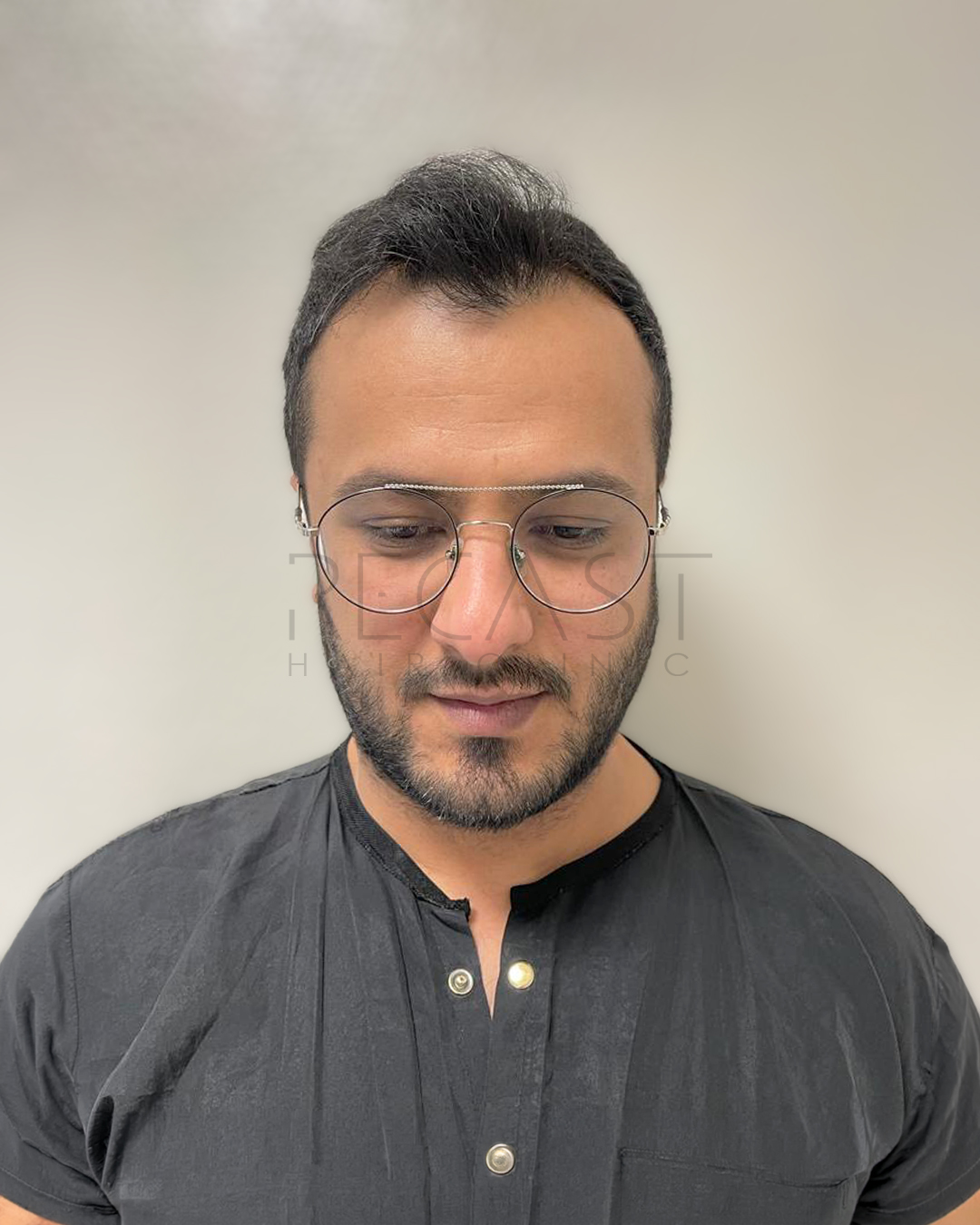 BEFORE
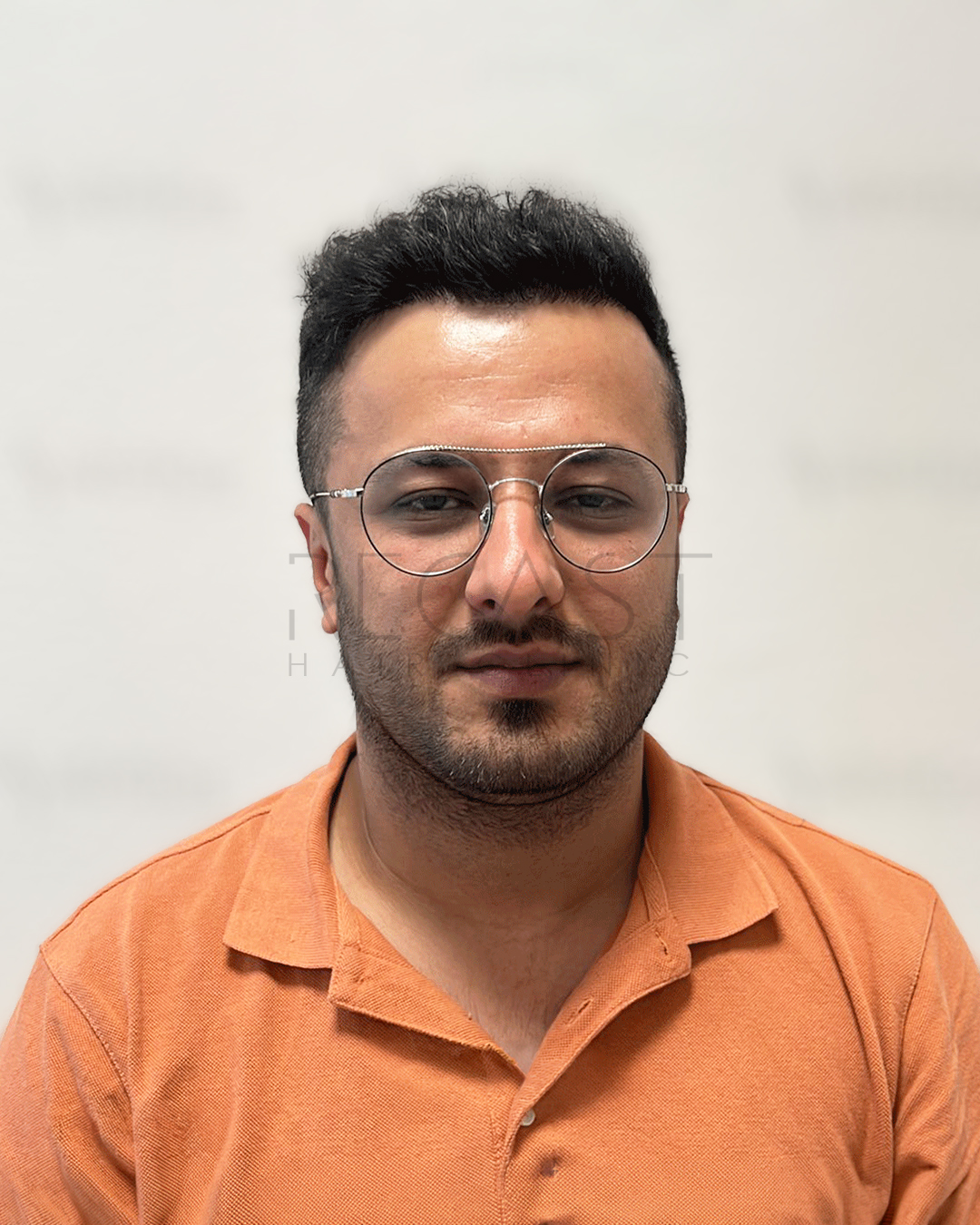 AFTER
AFTER
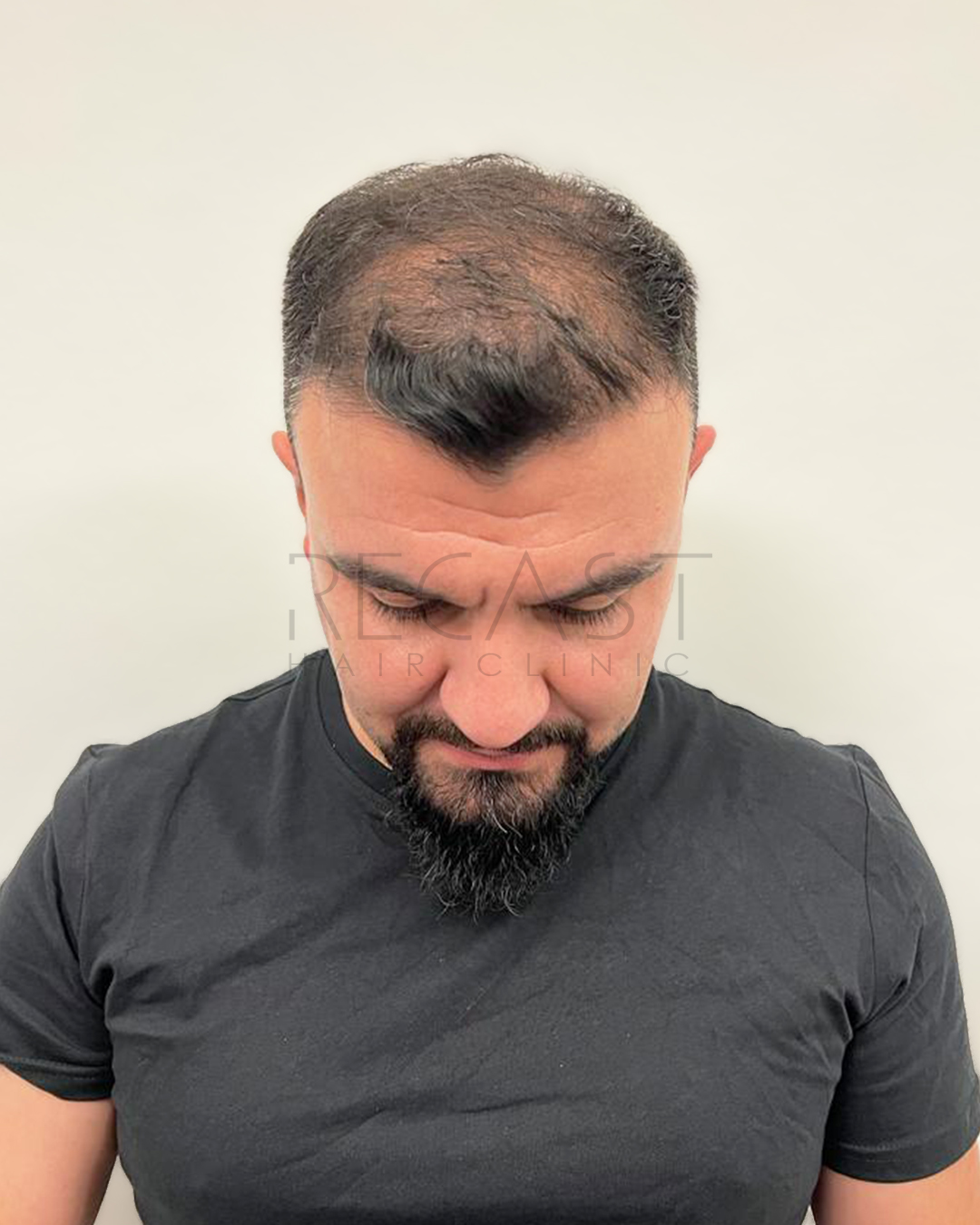 BEFORE
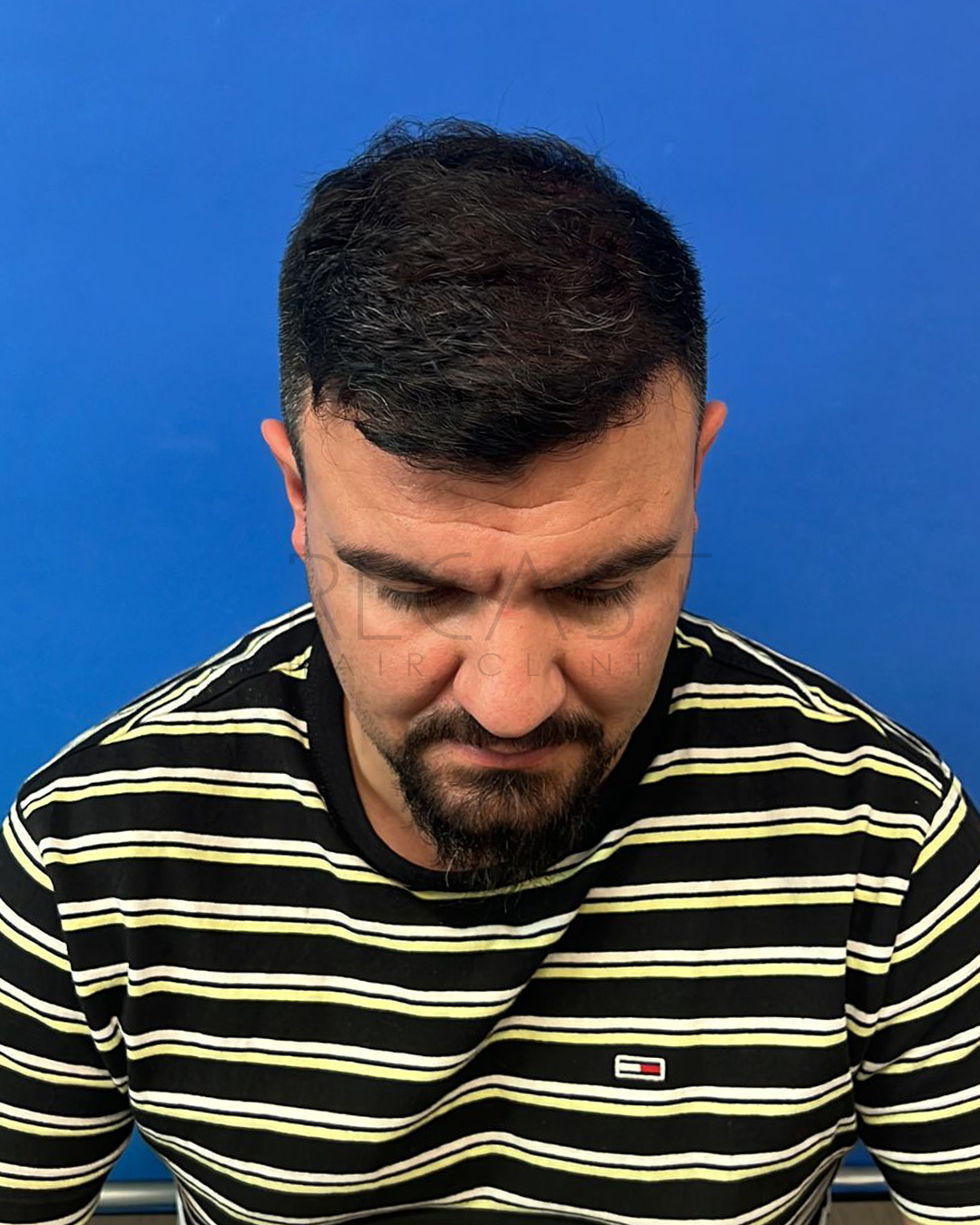 AFTER
AFTER
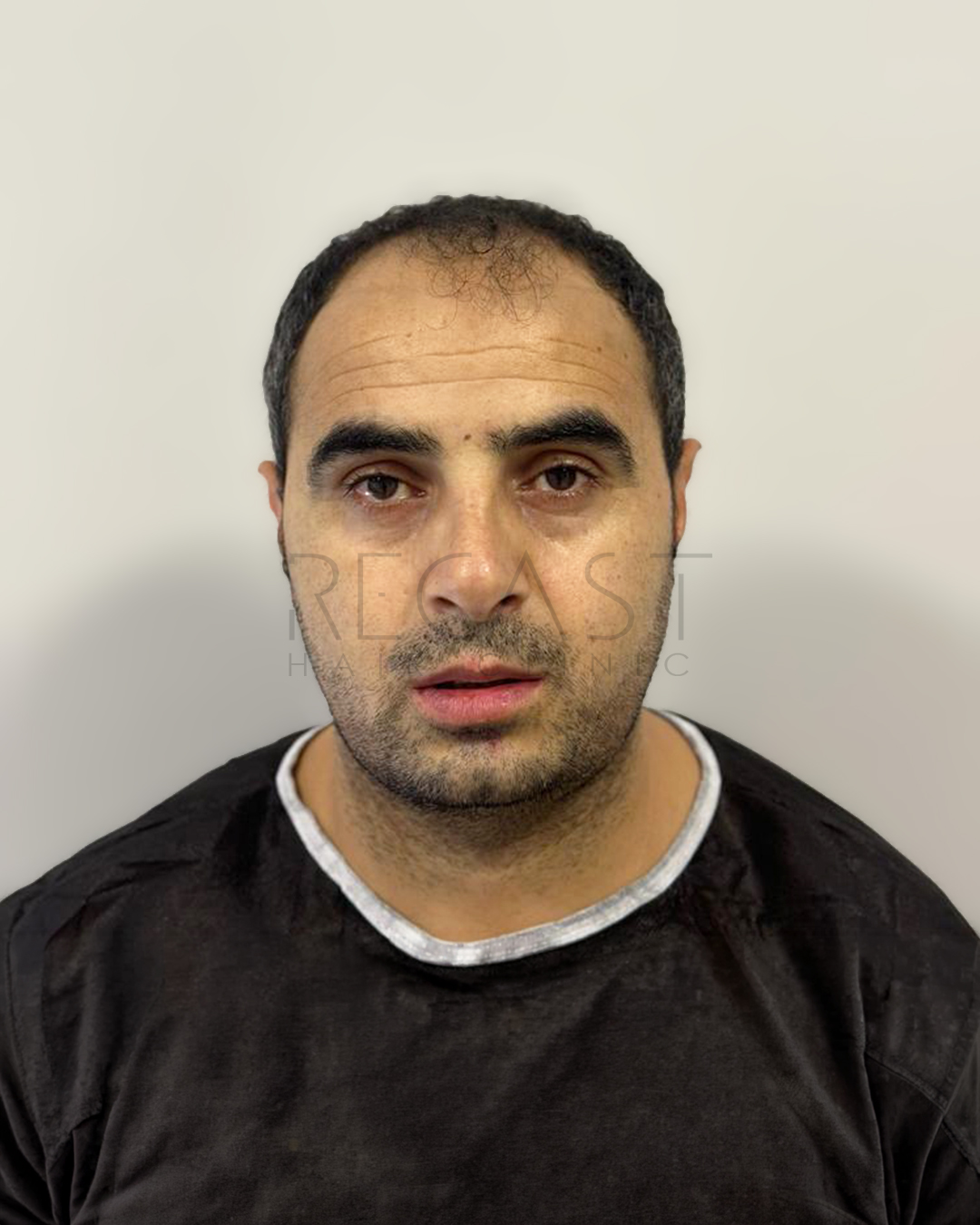 BEFORE
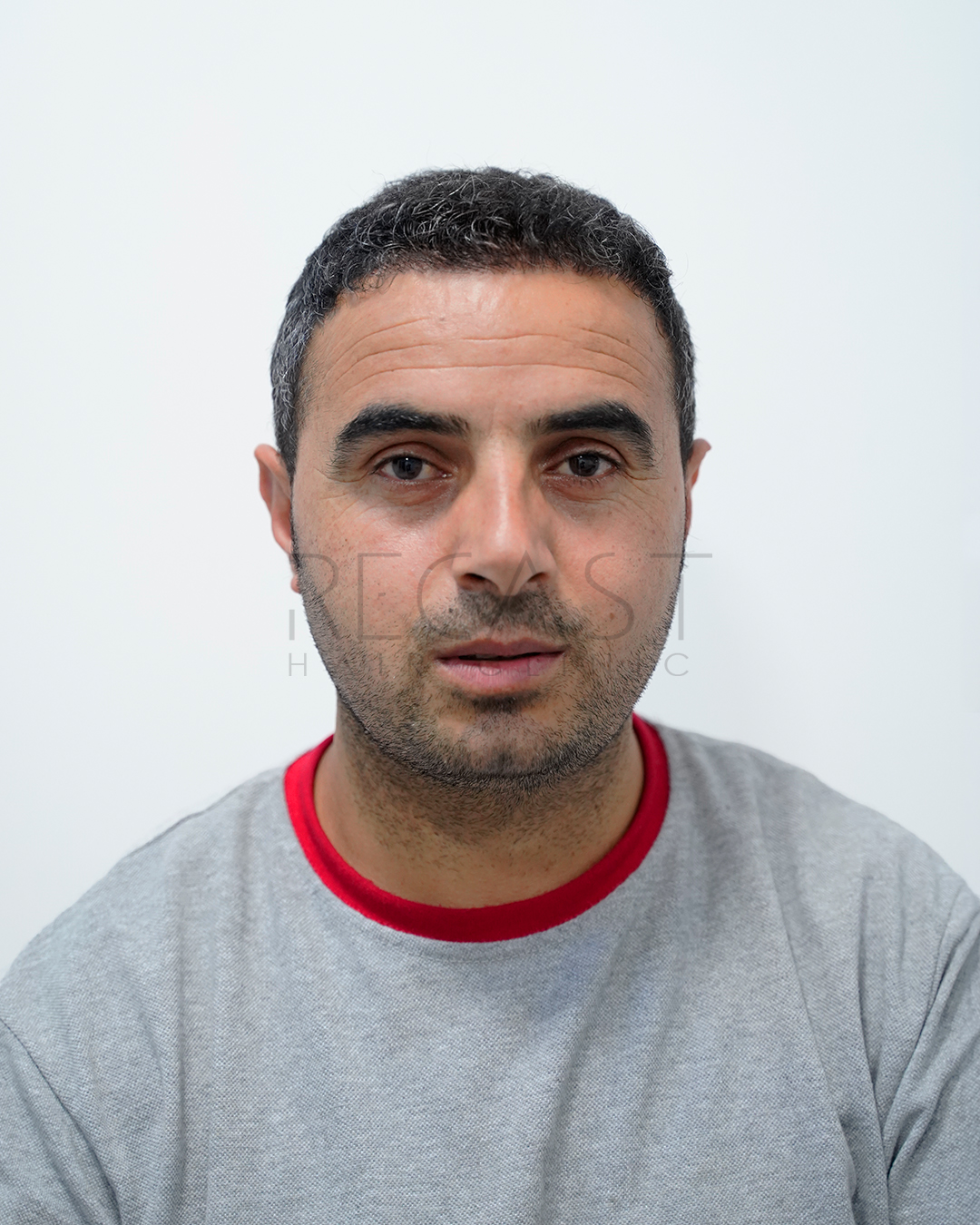 AFTER
AFTER
Would you like to achieve similar results?
Request Free AnalysisFrequently Asked Questions About Temple Hair Transplant
Find answers to the most important questions about Temple Hair Transplant. Click on a question to see the answer.
A Temple Hair Transplant specifically treats the temporal region – the areas on the sides of the forehead where men typically develop receding temples. These zones are often the first to be affected by androgenetic hair loss.
Receding temples are areas at the sides of the forehead where the hairline has retreated. They are caused by androgenetic alopecia, where DHT (dihydrotestosterone) damages the hair follicles. Temple Hair Transplant can fill in these areas again.
For a Temple Hair Transplant, 400 to 1,200 grafts per side are needed depending on the extent of the recession. Smaller corrections require fewer, while deep receding temples require more grafts accordingly.
Yes, an isolated Temple Hair Transplant is possible and very popular. Many patients start with treating only the receding temples and expand later if needed. This is also more affordable than a full treatment.
For Temple Hair Transplant, we recommend the DHI technique. The hairs at the temples grow at a very flat angle in specific directions. DHI allows the most precise control over angle and direction for natural results.
With the correct technique, a Temple Hair Transplant looks completely natural. The key is using single-hair grafts at the edges and following the natural growth direction pointing backward-downward.
No, the hairs transplanted in a Temple Hair Transplant are permanent. They come from the resistant back of the head. However, hair loss around the transplanted areas may progress, which is why we recommend medication support.
We generally recommend Temple Hair Transplant from age 25-30, when hair loss has stabilized. In younger patients, there is a risk that hair loss progresses and additional treatments become necessary.
Recovery after Temple Hair Transplant takes about 7-10 days for the crusts. Since the temples are very visible, slight redness may be noticeable for 2-3 weeks. A hat or cap makes it easy to conceal.
Temple Hair Transplant at our clinic costs between €1,800 and €3,500 all-inclusive, depending on the size of the areas to be treated. Temple-only treatment is more affordable than a complete hairline procedure.
Yes, we very often combine Temple Hair Transplant with a hairline treatment. The temples are the natural transition from the hairline to the sides and should be designed harmoniously.
The complete result of a Temple Hair Transplant is visible after 12-14 months. The hairs go through the normal growth cycle: Shock Loss after 2-4 weeks, first hairs after 3-4 months, full density after 12+ months.